
What Is Abhyanga? A Beginner’s Guide to Ayurvedic Self-Massage
Discover what Abhyanga is, its traditional Ayurvedic benefits, the oils used, and how beginners can practise this self-massage routine safely at home.
Abhyanga, often described as Ayurvedic oil massage, is a traditional self-care practice that involves gently massaging the body with oil. Rooted in Ayurveda, India’s traditional system of medicine, this practice is traditionally included in Dinacharya, the daily routine recommended for maintaining balance and supporting overall well-being. This beginner-focused explanation is part of ArogyaBodh’s Ayurvedic wellness education, designed to help readers understand traditional practices with practical safety context.
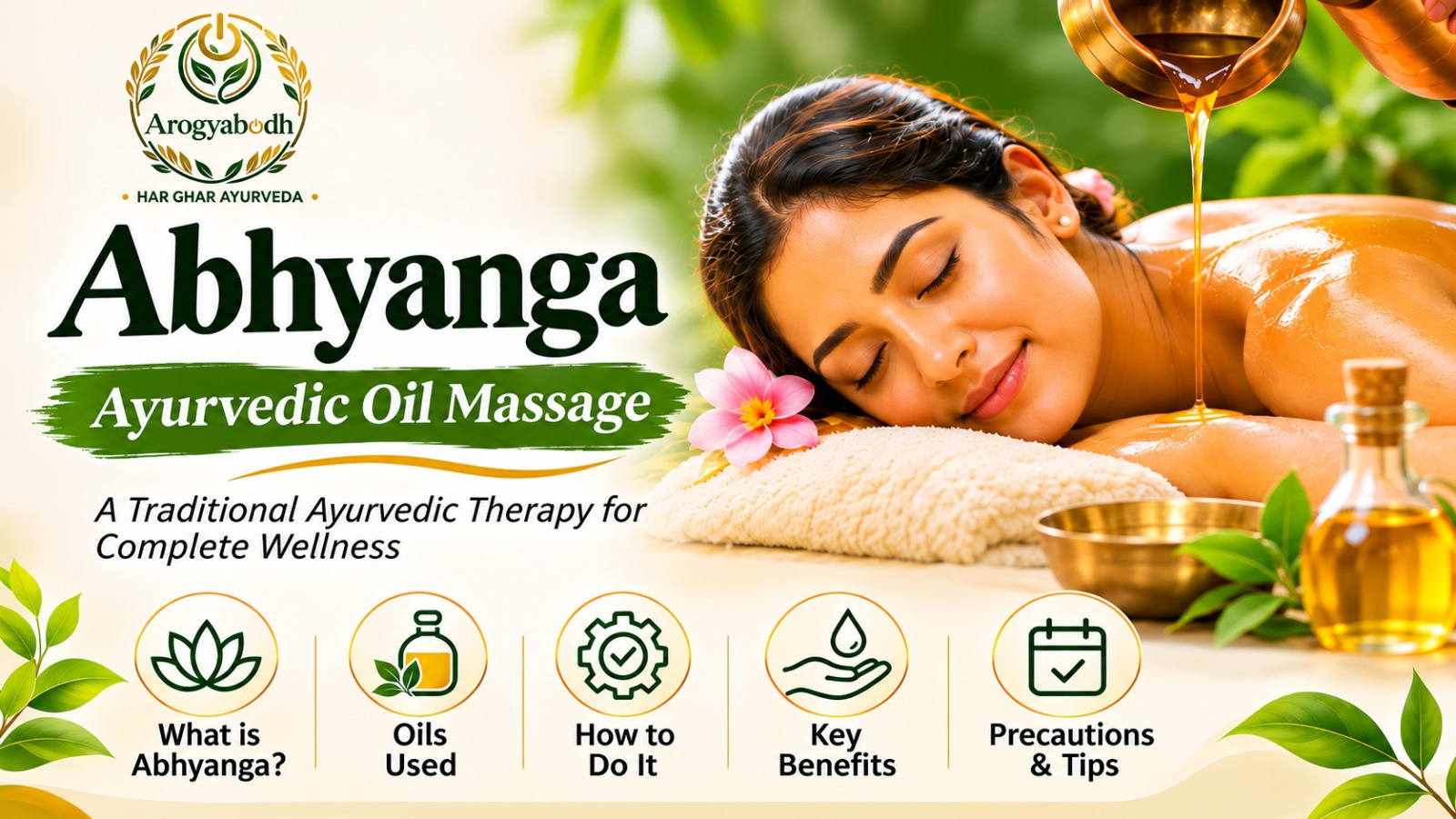
For someone new to Ayurveda, Abhyanga can be an accessible way to slow down, reconnect with the body and create a regular self-care ritual. It generally involves applying suitable oil to the skin, using gentle and rhythmic massage movements, and allowing time for the oil to remain on the body before bathing.
Unlike a conventional massage that may focus on a particular muscle group or physical concern, traditional Abhyanga takes a more holistic approach. It considers the individual’s constitution, the qualities of the oil, the season and the person’s overall condition.
But what exactly is Abhyanga? What oils are used, what are its traditional benefits, and how can beginners practise it safely at home? This guide explores everything you need to know about Abhyanga, from its Ayurvedic origins to practical techniques, oil selection and important precautions.
What Is Abhyanga in Ayurveda?
Abhyanga (pronounced uh-BHYUN-guh) is a traditional Ayurvedic oil massage involving the application of oil to the body, followed by gentle, systematic massage. The word comes from Sanskrit and refers to the practice of anointing or massaging the body with oil. In Ayurveda, it is considered an important part of Dinacharya, which means daily routine.
Traditional Ayurvedic texts describe Abhyanga as a practice intended to nourish the body, support physical comfort and promote a sense of balance. It is particularly associated with managing the qualities of Vata Dosha, which Ayurveda describes through characteristics such as dryness, lightness, mobility and coldness.
Abhyanga can be performed in two main ways:
· Self-Abhyanga: A person applies oil and massages their own body at home.
· Therapeutic Abhyanga: A trained Ayurvedic therapist performs the massage, often as part of a personalised treatment plan.
The technique, oil selection, massage duration and frequency may differ depending on individual requirements. It is also important to understand that Abhyanga is not simply about applying oil to the skin. In traditional practice, the choice of oil, massage movements, timing and individual suitability are all considered part of the process.
The Traditional Origins of Abhyanga
Abhyanga has a long history in Ayurvedic wellness practices. It is described in classical Ayurvedic literature as part of daily self-care and is also used in certain therapeutic settings. One of the important concepts associated with Abhyanga is Dinacharya. Ayurveda recommends maintaining consistent daily habits involving personal hygiene, nutrition, physical activity and self-care.
Within this framework, oil massage is traditionally considered a way to care for the skin and body while creating a calming daily ritual. Another important Ayurvedic concept is Snehana, which refers to oleation or the application of unctuous substances such as oils and ghee. Abhyanga is a form of external Snehana.
In professional Ayurvedic practice, Abhyanga may also be incorporated into Panchakarma-related treatment programmes. However, a therapeutic procedure performed by trained practitioners is not necessarily the same as a simple self-massage routine at home.
The traditional practice has evolved over generations, and today it is explored by people interested in Ayurveda, natural skincare and holistic wellness.
What Are the Traditional Benefits of Abhyanga?
Abhyanga is traditionally valued for its potential role in supporting physical comfort, relaxation and skin care. However, it is important to distinguish traditional Ayurvedic descriptions from benefits that have been established through modern clinical research. Here are some of the commonly discussed benefits.
1. Supports Relaxation and Stress Management
One of the main reasons people explore Abhyanga is its relaxing nature. The combination of warm oil, gentle touch and slow massage movements can create a calming self-care experience. Taking time away from daily activities may also help people feel more relaxed.
A small pilot study published in 2011 investigated the effects of Abhyanga on perceived stress. The researchers reported reductions in subjective stress following a massage session. However, the study involved only 20 healthy adults, so its findings should not be treated as definitive proof of a medical benefit.
For beginners, the most practical approach is to treat Abhyanga as an opportunity to slow down and establish a consistent wellness routine.
2. Helps Moisturise and Nourish the Skin
Oil application is an important part of Abhyanga. Depending on the formulation, oils can help reduce skin dryness by supporting the skin’s moisture barrier and reducing moisture loss. People with dry skin may find a suitable body oil helpful, especially during colder or drier weather.
However, not every oil is suitable for every skin type. Some individuals may experience irritation, clogged pores or allergic reactions to particular ingredients. Choosing a simple, skin-compatible oil and performing a patch test before regular use is advisable.
3. May Help Ease Everyday Muscle Tension
Gentle massage can provide temporary relief from everyday feelings of muscular tightness and physical fatigue. Abhyanga uses slow and rhythmic movements rather than necessarily relying on deep pressure. This can make it a comfortable self-care practice for people who prefer a gentle massage experience.
It should not, however, be considered a treatment for persistent muscle pain, injuries, joint disorders or unexplained physical symptoms. People experiencing ongoing discomfort should seek an appropriate medical assessment.
4. Encourages a Consistent Self-Care Routine
Modern lifestyles often leave little time for personal care. Abhyanga creates an opportunity to dedicate a few minutes to the body without requiring complicated equipment or an elaborate routine. Preparing the oil, applying it slowly and paying attention to different parts of the body can become a mindful daily activity. Consistency is more important than trying to follow an unnecessarily complicated routine.
5. Traditionally Associated with Better Sleep
In Ayurveda, Abhyanga is traditionally associated with relaxation and healthy sleep habits. Some people find a gentle oil massage before bathing to be a calming addition to their evening routine. However, evidence specifically establishing Abhyanga as a treatment for insomnia remains limited. It should not replace professional evaluation or treatment for persistent sleep problems.
6. Traditionally Used to Support Vata Balance
Ayurveda describes three fundamental functional principles known as Doshas: Vata, Pitta and Kapha. Vata is traditionally associated with movement, dryness, lightness and coldness. Because Abhyanga involves the application of oil and gentle massage, it is traditionally recommended in certain Vata-related wellness routines. This is an Ayurvedic interpretation rather than a scientifically established mechanism of disease prevention or treatment.
An individual’s constitution and current health condition should be considered before selecting an oil or treatment approach.
Which Oil Is Best for Abhyanga?
Choosing the right oil is an important part of the Abhyanga experience. In Ayurveda, oil selection traditionally depends on the individual’s Dosha, skin condition, season and therapeutic requirements. For beginners, it is generally sensible to start with a simple oil that suits their skin rather than immediately choosing a complex herbal formulation.
1. Sesame Oil
Sesame oil is one of the traditional choices for Abhyanga. In Ayurveda, it is generally considered warming and is commonly associated with Vata-oriented routines. Its texture makes it suitable for body massage, although some people may find it too heavy. People with sesame allergies should avoid it.
2. Coconut Oil
Coconut oil is commonly used in traditional body-care practices. It has a relatively rich texture and is often preferred in warm climates or by people who enjoy a lighter-feeling massage experience. It may help reduce skin dryness, although its suitability depends on the individual’s skin type. People prone to clogged pores or acne should consider whether coconut oil is appropriate for the area being treated.
3. Sunflower Oil
Sunflower oil is another option for people looking for a relatively light body oil. It is commonly used in skincare formulations and may be suitable for some individuals who prefer a less heavy texture. As with other oils, skin compatibility should be checked before regular use.
4. Medicated Ayurvedic Oils
Traditional Ayurvedic practice also uses specially prepared herbal oils. These formulations may contain combinations of herbs and a base oil, depending on their intended traditional use. Their ingredients and suitability can vary considerably. Medicated oils should not automatically be considered better than plain oils. If the purpose is therapeutic, an appropriately qualified Ayurvedic practitioner should recommend the formulation.
Quick comparison: sesame oil is traditionally used in Vata-oriented routines but should be avoided with sesame allergy; coconut oil is common in body care but may not suit acne-prone skin; sunflower oil may be chosen for a lighter texture; and medicated Ayurvedic oils are best selected with professional guidance.
There is no single best Abhyanga oil for everyone. Skin type, allergies, climate and individual health requirements should guide the choice.
How to Do Abhyanga at Home: A Step-by-Step Beginner’s Guide
Self-Abhyanga does not require specialised equipment. A clean space, a suitable oil and a little time are usually sufficient for a gentle home routine. Beginners should start slowly and avoid applying excessive pressure.
Step 1: Choose the Right Oil
Select an oil that is compatible with your skin. If you are new to oil massage, choose a simple formulation rather than a heavily fragranced or complex herbal blend. Before using it on larger areas, perform a patch test on a small area of skin and observe for any irritation.
Step 2: Warm the Oil Safely
Traditional Abhyanga often uses mildly warmed oil. Place a small amount of oil in a clean container and warm it indirectly using a warm-water bath. Always check the temperature before applying it to your skin. The oil should feel comfortably warm, never hot. Do not heat oil directly over an open flame or use it if it feels excessively warm.
Step 3: Find a Comfortable Space
Choose a warm, private space where you can move comfortably. Place a washable towel or mat underneath you to protect the floor and prevent accidental slipping. Keep a towel nearby to remove excess oil when needed.
Step 4: Begin with Gentle Application
Start by applying a small amount of oil to your hands. You can begin with the arms or legs and gradually move to other comfortable areas of the body. Use slow, gentle movements and avoid excessive pressure. Traditional techniques commonly use long, gentle strokes over the arms and legs, circular movements around joints, gentle movements over the abdomen and light massage around the shoulders and neck.
Avoid applying pressure directly over injured or painful areas.
Step 5: Massage the Different Parts of Your Body
Arms and hands: Apply oil using gentle strokes along the arms. Massage the palms and fingers lightly. Legs and feet: Use long strokes along the legs and gentle circular movements around the knees and ankles. Pay attention to the soles of the feet, but avoid walking on oily surfaces. Abdomen: If comfortable, use very light circular movements. Avoid abdominal massage during pregnancy or when you have unexplained abdominal pain unless a healthcare professional has advised otherwise. Shoulders and neck: Use gentle strokes without applying deep pressure to the neck or spine. Back: Massage only the areas you can comfortably reach. Do not strain or twist to reach difficult areas. Head and scalp: Traditional Abhyanga may include a separate head massage. This is optional for beginners. Avoid applying oil to the scalp if you have an irritated or infected scalp condition.
Step 6: Allow the Oil to Remain on Your Skin
After completing the massage, you may allow the oil to remain on the skin briefly. There is no universal requirement to leave the oil on for a particular period. Beginners can start with a short session and see how their skin responds. Avoid sitting in a cold environment if the oil makes you uncomfortable.
Step 7: Take a Comfortable Shower
After the massage, take a comfortably warm shower to remove excess oil. Use a mild cleanser if necessary, especially if your skin feels excessively greasy. Be particularly careful when stepping into the shower, as oil can make the floor slippery. Dry yourself gently with a clean towel.
How Often Should You Practise Abhyanga?
The ideal frequency depends on individual preference, skin condition, available time and Ayurvedic guidance. Traditional Ayurveda describes Abhyanga as a daily routine. However, beginners do not need to start with daily full-body massage. A practical approach is to begin with two or three short sessions per week and observe how your skin responds.
If you enjoy the routine and experience no irritation, you may discuss a more regular practice with a qualified practitioner. The important thing is to avoid treating frequency as a competition. A comfortable and sustainable routine is more useful than forcing yourself to follow a schedule that does not suit your lifestyle.
What Is the Best Time to Perform Abhyanga?
Traditionally, Abhyanga is often recommended in the morning as part of Dinacharya. A morning routine may involve oil massage followed by bathing and other personal-care activities. Some people also prefer a gentle massage in the evening because it fits more comfortably into their schedule.
There is no universally proven ideal time for Abhyanga. Choose a time when you can practise without rushing, maintain a comfortable body temperature and clean the oil safely afterwards.
Abhyanga and the Three Doshas: Vata, Pitta and Kapha
An important aspect of Ayurveda is understanding the three Doshas. According to traditional Ayurvedic philosophy, each Dosha represents a combination of qualities and functional principles.
Vata Dosha
Vata is traditionally associated with movement, dryness, lightness and coldness. Warm oil massage is commonly recommended in Vata-oriented routines because it introduces qualities traditionally considered opposite to dryness and coldness. Sesame oil is a common traditional choice.
Pitta Dosha
Pitta is associated with heat, transformation and intensity. Ayurvedic practitioners may recommend oils and massage approaches that are considered cooling and gentle. Coconut oil is commonly used in certain Pitta-oriented routines. However, skin sensitivity and individual suitability should always be considered.
Kapha Dosha
Kapha is traditionally associated with heaviness, stability and moisture. Some Ayurvedic approaches recommend lighter oils and less intensive oil application for Kapha-oriented individuals. A practitioner may also consider the season and overall condition before recommending a particular routine.
It is important to remember that Dosha categories are part of traditional Ayurvedic theory. They are not equivalent to scientifically validated medical diagnoses.
Abhyanga vs Regular Body Massage: What Is the Difference?
Although Abhyanga and conventional body massage may both involve touch and massage movements, their traditional objectives and approaches can differ. Abhyanga originates in Ayurvedic tradition, typically uses oil, and may consider Dosha, season and individual constitution. Conventional body massage includes diverse traditions and may use oil, lotion or no medium, with techniques and goals depending on the modality. Neither approach is universally better; the appropriate choice depends on personal preference, health needs and practitioner qualifications.
Who Should Avoid or Modify Abhyanga?
Abhyanga is not suitable for everyone in every situation. Although gentle oil application may be comfortable for many healthy adults, certain health conditions require caution. Consider avoiding or seeking professional advice before practising Abhyanga if you have:
· Fever or an acute illness.
· Active skin infections, open wounds or significant skin irritation.
· A known allergy to the oil or any herbal ingredient.
· Recent injuries, fractures or surgical procedures.
· A suspected or diagnosed blood clot.
· Unexplained swelling, severe pain or unusual tenderness.
· A bleeding disorder or a condition that increases bruising risk.
· A medical condition for which massage has been restricted.
Pregnant individuals should consult their healthcare professional before beginning a massage routine. The suitability of massage and oils can depend on the stage of pregnancy and individual health circumstances. People with chronic conditions, reduced skin sensation or circulation problems should also seek appropriate guidance.
The National Institute of Ayurveda’s Panchakarma protocols discuss specific indications, contraindications and precautions for Abhyanga. These professional protocols should not be interpreted as a universal home-treatment prescription. If irritation, itching, redness or discomfort develops during or after massage, stop the practice and wash the affected area.
If you are considering a practitioner-led approach rather than a home routine, explore ArogyaBodh Ayurvedic consultation to discuss whether an Ayurvedic service is appropriate for your individual circumstances. Consultation is not a substitute for medical care.
Most importantly, Abhyanga should never replace medical evaluation or prescribed treatment.
Is Abhyanga Scientifically Proven?
This is an important question for anyone exploring traditional wellness practices. Abhyanga has a long history in Ayurveda, but traditional use and modern scientific evidence are not the same thing.
Some research has explored the effects of Abhyanga on perceived stress and relaxation. For example, a small pilot study published in 2011 reported reductions in subjective stress after a session of Ayurvedic massage. However, the study was relatively small, and larger, well-designed clinical trials are needed to establish specific health benefits.
Research on massage therapy more broadly has examined outcomes such as short-term pain relief, relaxation and quality of life. However, these findings cannot automatically be applied to every traditional Abhyanga technique or oil formulation.
For readers researching Abhyanga massage or Ayurvedic self massage, the distinction between a simple Ayurvedic oil massage at home and a practitioner-led therapy matters. ArogyaBodh shares educational information and service pathways so readers can explore Ayurveda with context rather than treating every traditional practice as a medical cure.
If you want to learn more about care options, browse ArogyaBodh Ayurvedic home care and the available Panchakarma therapies. For more educational articles, visit the ArogyaBodh blog. These pages should be reviewed for exact live URLs and service details before publication.
Exploring Abhyanga Through ArogyaBodh
The most balanced way to understand Abhyanga is to recognise it as a traditional Ayurvedic self-care practice that may provide a relaxing massage experience and support skin moisturisation when an appropriate oil is used. It should not be marketed as a proven cure for chronic diseases, a guaranteed detoxification method or a replacement for evidence-based medical care.
Frequently Asked Questions About Abhyanga
1. What is Abhyanga massage?
Abhyanga is a traditional Ayurvedic oil massage involving the application of oil to the body, followed by gentle and systematic massage movements. It is traditionally practised as part of Dinacharya, the Ayurvedic daily routine.
2. Can beginners perform Abhyanga at home?
Yes. Healthy adults can generally begin with a simple, gentle self-massage routine using a suitable oil. Beginners should perform a patch test, use comfortably warm rather than hot oil and avoid areas with injuries or skin irritation.
3. Which oil is best for Abhyanga?
Sesame, coconut and sunflower oils are common options. Traditional Ayurvedic oil selection may depend on Dosha, season and individual requirements. The best choice is one that is suitable for your skin and does not cause irritation.
4. How long should an Abhyanga session last?
A beginner can start with approximately 10–15 minutes of gentle massage. The duration may vary depending on personal comfort and the technique being followed. Professional therapeutic Abhyanga sessions may take longer.
5. Should Abhyanga be performed daily?
Daily Abhyanga is described in traditional Ayurvedic routines. However, beginners can start with a few sessions per week and adjust according to skin tolerance, personal preference and professional guidance.
6. Is Abhyanga suitable for all skin types?
Not necessarily. People with sensitive skin, allergies, active acne, eczema or other skin conditions should be careful when selecting oils. A patch test and professional advice may help determine suitability.
7. Can Abhyanga help with sleep?
Traditional Ayurveda associates Abhyanga with relaxation and healthy sleep routines. Some people may find a gentle massage calming, but there is insufficient evidence to establish it as a treatment for insomnia.
8. Can I perform Abhyanga after eating?
Traditional Ayurvedic practice generally recommends avoiding massage immediately after a meal. It is preferable to choose a comfortable time when you are not feeling overly full or unwell. For therapeutic procedures, follow your practitioner’s instructions.
9. Is Abhyanga the same as Panchakarma?
No. Abhyanga is an Ayurvedic oil massage practice. It may be included in certain Panchakarma treatment programmes, but Panchakarma involves a broader set of specialised procedures performed according to an individual’s condition and professional assessment.
10. Can Abhyanga remove toxins from the body?
Ayurveda discusses cleansing and balancing through its own traditional concepts. However, there is no reliable clinical evidence that ordinary oil massage removes toxins from the body. Avoid treating detoxification claims as established scientific facts.
Conclusion: Making Abhyanga Part of Your Self-Care Routine
Abhyanga is more than an oil application technique in traditional Ayurveda. It is a structured self-care practice that encourages people to spend time caring for their bodies through gentle massage and mindful routines.
For beginners, the process can be simple: choose a suitable oil, warm it safely, use gentle massage movements and finish with a comfortable shower. There is no need to begin with complicated techniques or expensive herbal formulations. Start with a routine that feels comfortable and pay attention to how your skin responds.
At the same time, remember that traditional Ayurvedic practices should be approached with an understanding of individual health requirements. People with existing medical conditions, allergies, injuries or pregnancy-related concerns should seek professional guidance before beginning.
ArogyaBodh aims to make traditional Ayurvedic knowledge more accessible through educational resources and personalised professional guidance. Our approach centres on combining traditional wellness knowledge with informed, individualised care. If you are interested in exploring Abhyanga or other Ayurvedic therapies, understanding your individual needs is a sensible first step. A qualified Ayurvedic practitioner can help you determine whether the practice is appropriate and guide you towards a suitable approach.
Explore Abhyanga and Ayurvedic Wellness with ArogyaBodh
Explore Ayurvedic wellness with ArogyaBodh and take an informed step towards a more mindful self-care routine.